Literary Oaxaca: Vasconcelos, Henestrosa, Rulfo, Calvino, Lawrence, and Lowry
Oaxaca is known for its food and mezcal, but it also has a literary side, the same as Paris does for me, and it’s easy to walk right past it.
Here are the writers who came from here, the ones who passed through, and where you can still find them.
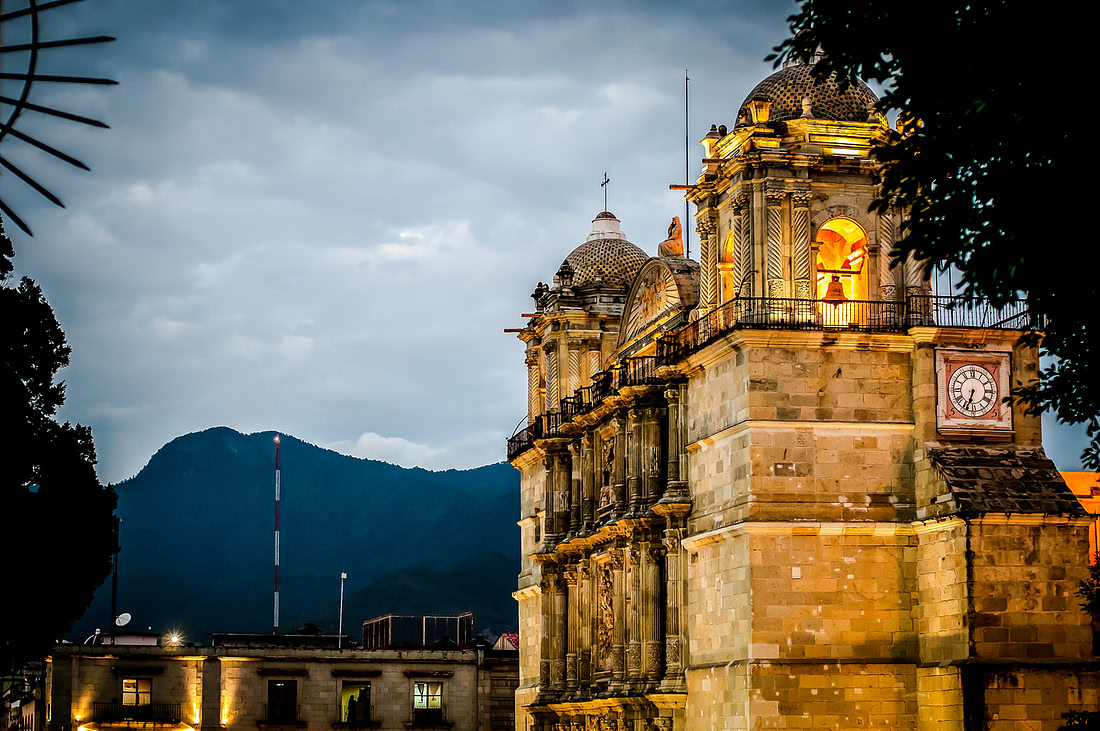
José Vasconcelos
Vasconcelos was born in Oaxaca City in 1882. He became Mexico’s first Secretary of Public Education, and he’s the one who handed the walls of public buildings to muralists like Diego Rivera. He wrote La raza cósmica, and a long memoir that begins with Ulises criollo.
Andrés Henestrosa
Henestrosa was a Zapotec writer from the Isthmus who went to Mexico City as a teenager, barely speaking Spanish, and became one of the country’s best-known writers. His first book, Los hombres que dispersó la danza, retells the Zapotec legends he grew up with. His own books are now the Biblioteca Andrés Henestrosa, a public library in the Casa de la Ciudad, near my office. I’ve shown my own photographs there.
Macedonio Alcalá
Not a writer, but you’ll walk his street. Alcalá, the pedestrian street that runs up to Santo Domingo, is named for the composer of Dios nunca muere, the waltz that is Oaxaca’s unofficial anthem.
Juan Rulfo
Rulfo wrote Pedro Páramo and El llano en llamas, two of the most important books in Mexican literature. He was also a serious photographer, and in the 1950s he photographed in Oaxaca. His photos are quiet, a lot like his writing.
Italo Calvino
Calvino’s short story Under the Jaguar Sun follows an Italian couple traveling in Mexico. In Oaxaca they stay in a hotel that used to be a convent, and spend the story eating. That’s the old convent of Santa Catalina, now the Quinta Real, a couple of blocks from Santo Domingo. I’ve photographed weddings there.
D.H. Lawrence
Lawrence arrived in Oaxaca in November 1924 and stayed into early 1925, in a house on Avenida Pino Suárez, near El Llano park. He finished The Plumed Serpent here and wrote much of Mornings in Mexico, including essays on the Saturday market and a walk out to the village of Huayapam. He also got very sick here, and never fully recovered.
Malcolm Lowry
Lowry came to Oaxaca in the late 1930s, drank a great deal, and spent part of his stay in jail. The friend he made here, a Zapotec man named Juan Fernando Márquez, found his way into Under the Volcano. Lowry wrote about Oaxaca again, years later, in Dark as the Grave Wherein My Friend Is Laid.
Aldous Huxley
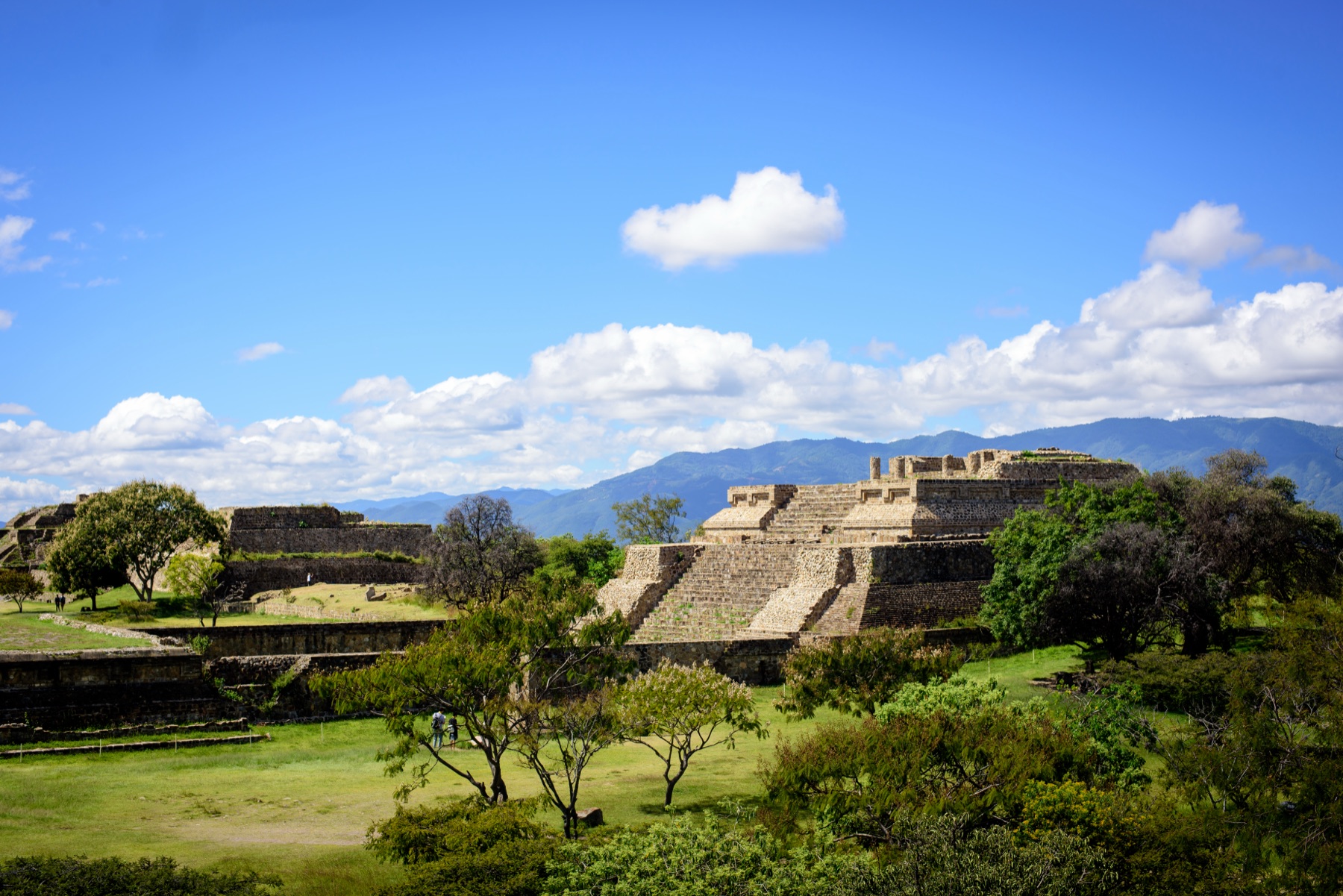
Huxley passed through in the early 1930s and wrote about Oaxaca, Monte Albán, and Mitla in Beyond the Mexique Bay.
Sergei Eisenstein
In 1931 the Soviet director was in Mexico shooting ¡Que viva México!. Part of it was filmed on the Isthmus of Tehuantepec, in the south of the state, and after the earthquake that January he filmed the damage in Oaxaca City itself.
Oliver Sacks
In 2000 Sacks came with a group from the American Fern Society, and wrote about it in Oaxaca Journal. It’s a short book about ferns, chocolate, and mezcal, and a good one to read on the plane.
Francisco Toledo
Toledo was a painter, but he also did a lot for books and photography in Oaxaca. He founded the Instituto de Artes Gráficas de Oaxaca (IAGO) on Alcalá, across from Santo Domingo, with its library. He founded the Centro Fotográfico Manuel Álvarez Bravo, a few blocks away. If you visit only one of these places, make it IAGO.
His daughter, Natalia Toledo, is a poet who writes in Zapotec and Spanish. Her work has been translated into English, too, and it’s a good way into the Isthmus her father and Henestrosa came from.
The photographers
Toledo named the photography center for Manuel Álvarez Bravo, Mexico’s great photographer, who worked in Oaxaca and the Isthmus. Edward Weston and Tina Modotti photographed here in the 1920s, and Henri Cartier-Bresson photographed in Juchitán in 1934.
Walk it with me
Most of this fits into a couple of hours on foot in the Centro. It’s the route of my Walking Photo Course: Literary Oaxaca, if you’d like to see it with a camera in hand. And if Paris is more your city, here’s the Paris I love to photograph.