
Oaxaca Day Trips & Tours
Ready to discover Oaxaca?
DAY TRIPS from Oaxaca City
If you’re planning a trip around Oaxaca, or you’re coming in for a wedding and want to make the most of your time here, this page is for you.
Oaxaca City is small, but there’s a lot to see within a few hours of it: the petrified waterfalls at Hierve el Agua, the ruins at Monte Albán and Mitla, weaving and pottery villages, mezcal distilleries, and a mountain town in the clouds. Below are the trips I send couples and their guests on most often.
I don’t run tours myself, but I can connect you with guides I’ve used or sent clients to for years. They know the sites, drive safely, and speak English. Reach out through the contact page, by WhatsApp at 52-951-594-3025, or on Instagram and I’ll point you the right way. Guides set their own prices, so ask them directly once I’ve connected you.
Explore Oaxaca with me
If you’d like to see the city with me instead, take my Walking Photo Course: Literary Oaxaca. It’s two hours on foot from Santo Domingo, past Francisco Toledo’s graphic arts library, Andrés Henestrosa’s library, and the street where D.H. Lawrence lived. I teach along the way, tailored to you and whatever we find, with any camera or your phone. It’s $120 for one person, $180 for two or three, and $250 for four or five.
Centro Histórico
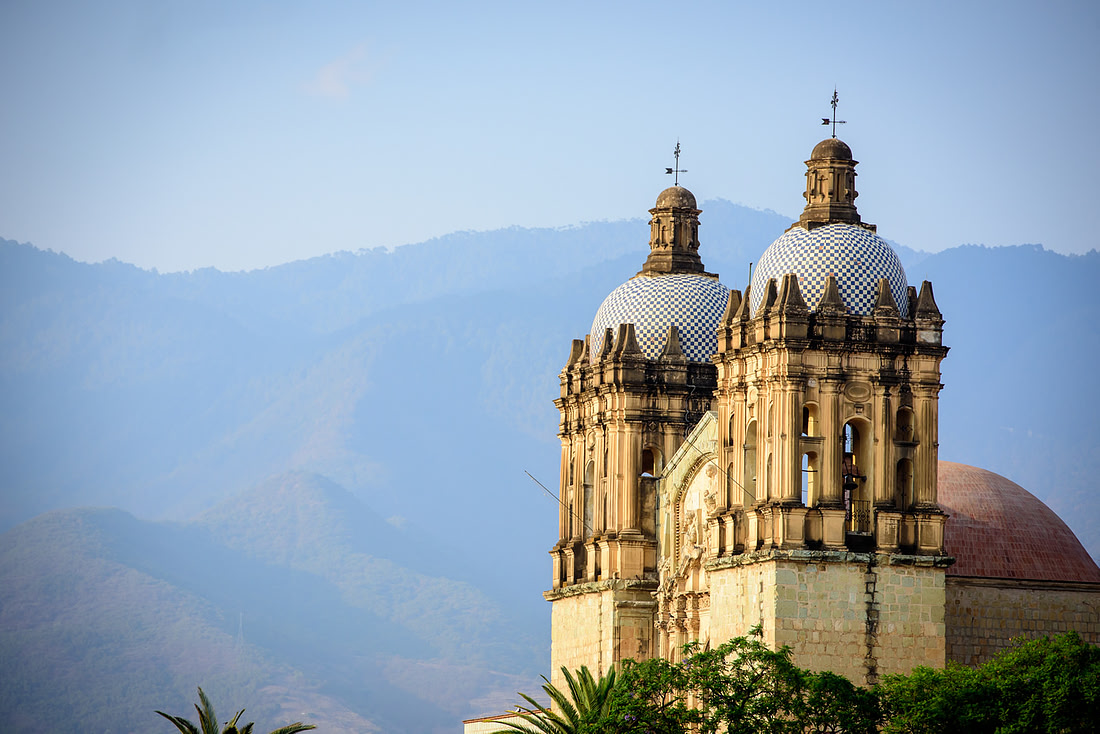
You don’t need a car or a guide for this one. The historic center is easy to cover on foot: the Zócalo, the Templo de Santo Domingo de Guzmán with its gold-leaf interior, the Mercado 20 de Noviembre for lunch, and plenty of mezcalerías and cafés in between.
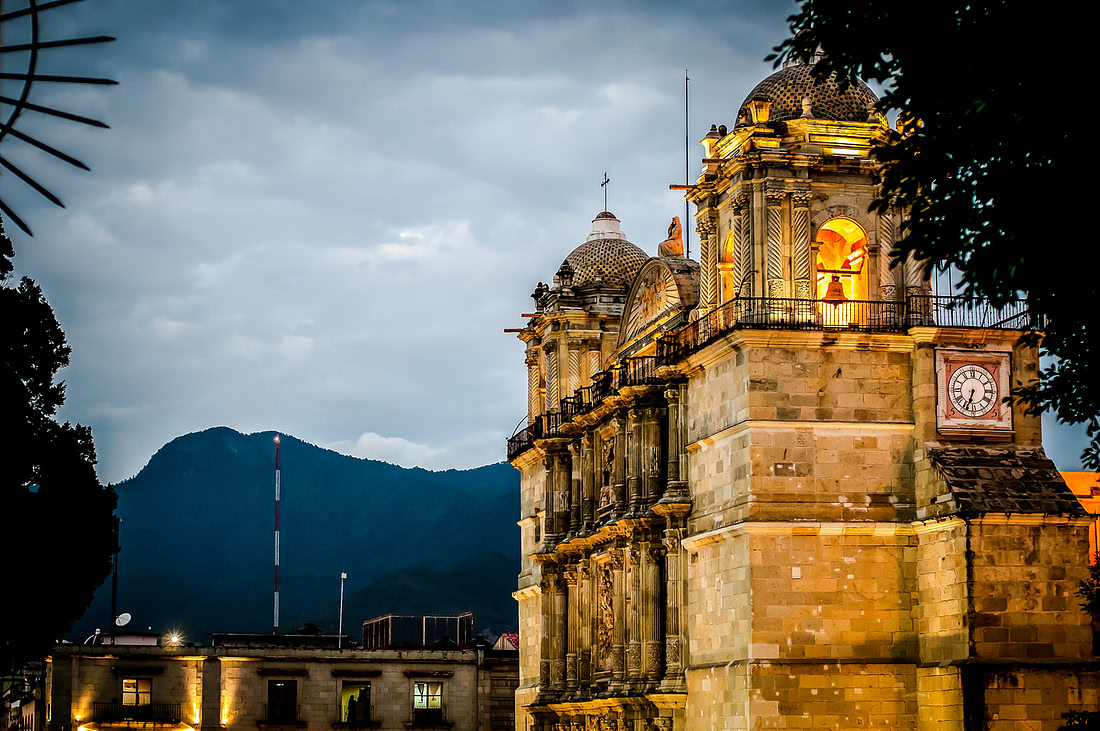
It’s a good first afternoon while you get used to the altitude, or a slow morning after a late wedding night. If it rains, you can duck into the arcades and churches.
Go out again after dark if you can. The cathedral and Santo Domingo are lit up at night, and the Zócalo has marimba bands and street food.
Alebrijes & Barro Negro
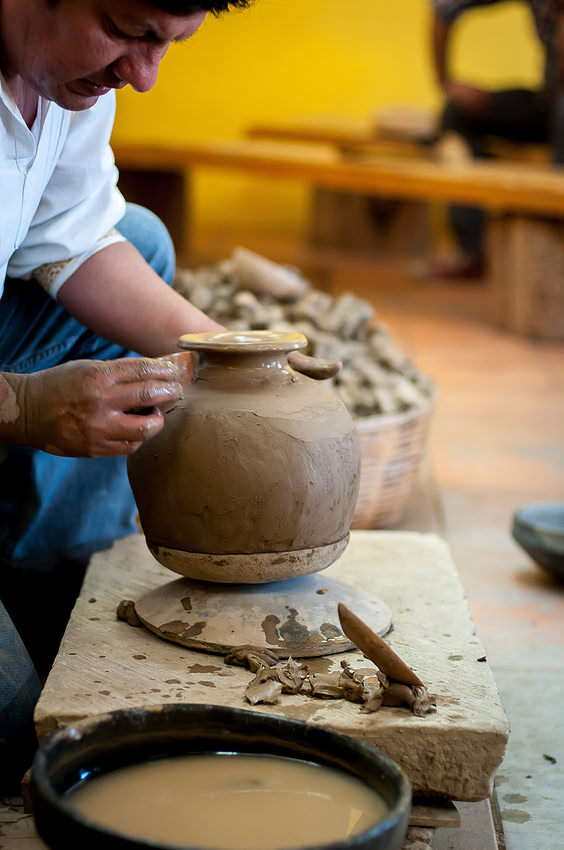
Some Monte Albán tours make a quick stop at one of these villages on the way back. This is the longer version, if you want to spend time in the workshops. San Martín Tilcajete and Arrazola are the villages best known for alebrijes, the brightly painted wood carvings of animals. The workshops will show you the carving and the painting, which can take weeks for a single piece.

Pair it with San Bartolo Coyotepec, where they make barro negro, the black clay pottery. A good guide can do both in a half-day and have you back in the city for lunch.
Textiles & Barro Rojo

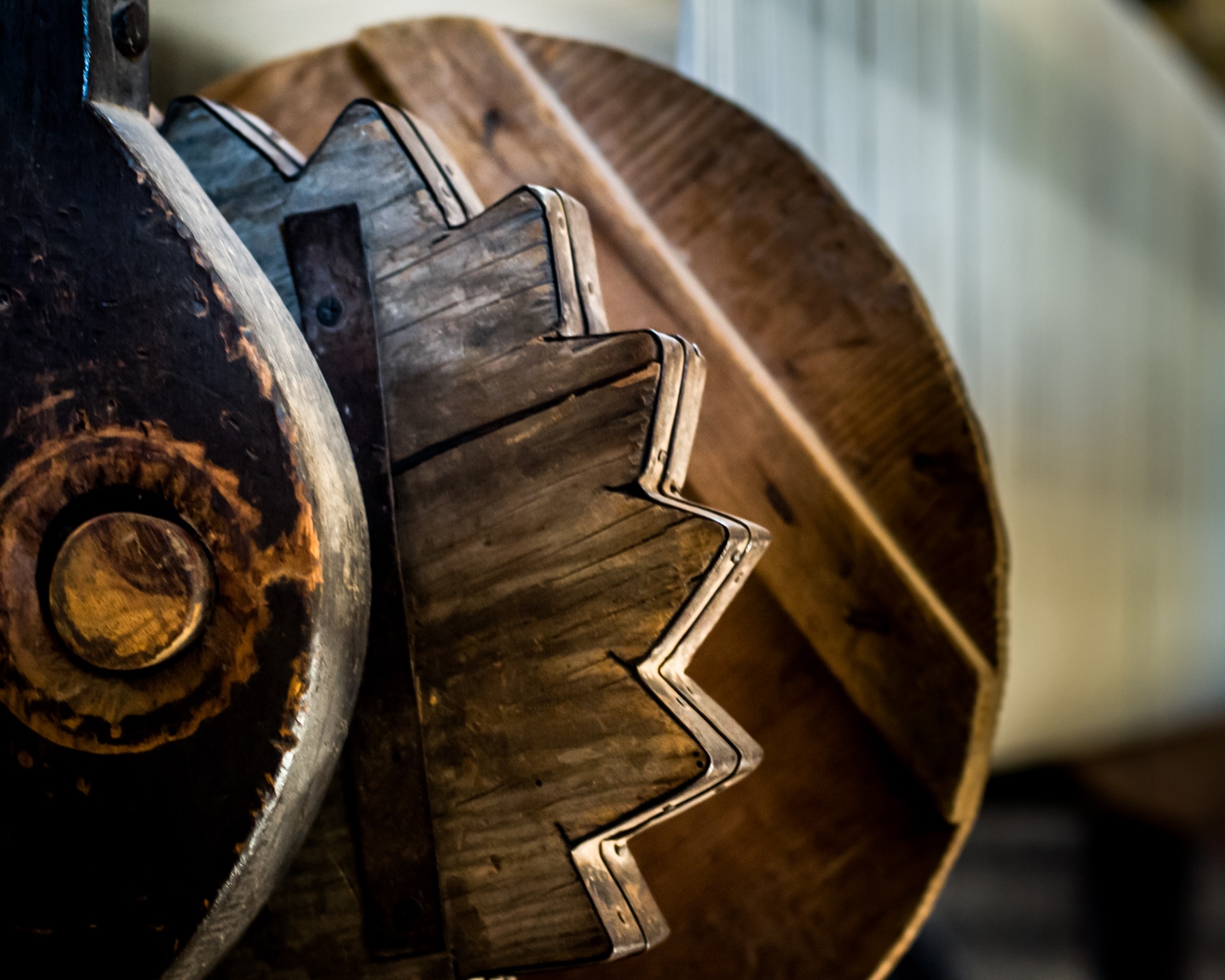
Teotitlán del Valle is the Zapotec rug-weaving village. Families there still dye the wool by hand with cochineal, indigo, and other plants, and weave on wooden pedal looms. A single rug can take weeks.
Some tours add San Marcos Tlapazola nearby, where women make barro rojo, red clay pottery shaped by hand and polished with a stone. It’s a quieter stop, and worth it if your guide offers it.
Hierve el Agua & Mitla
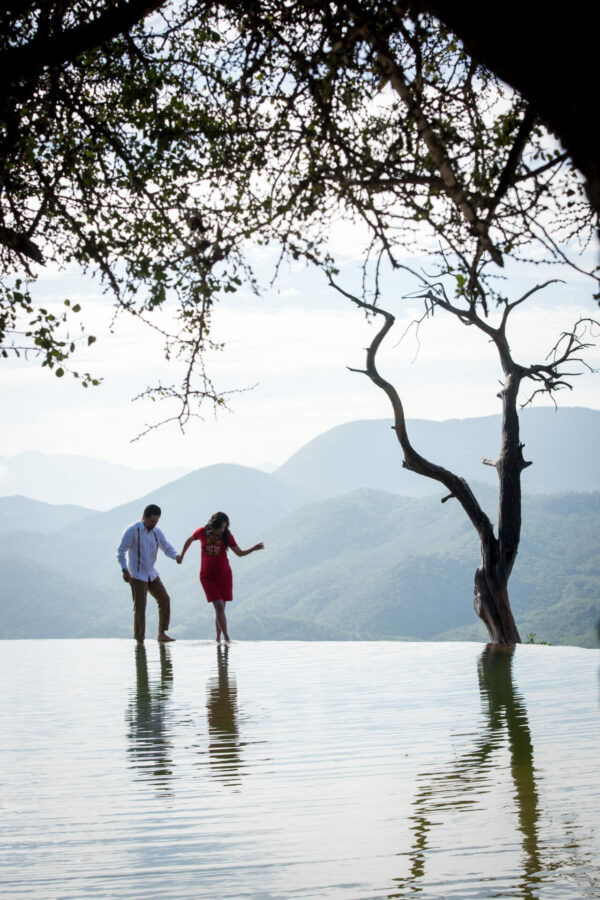
This is the one I recommend most. Hierve el Agua is a set of mineral springs that have built up over thousands of years into rock formations that look like frozen waterfalls. You can swim in the pools at the top, with the valley below you. I bring couples here for portraits often.
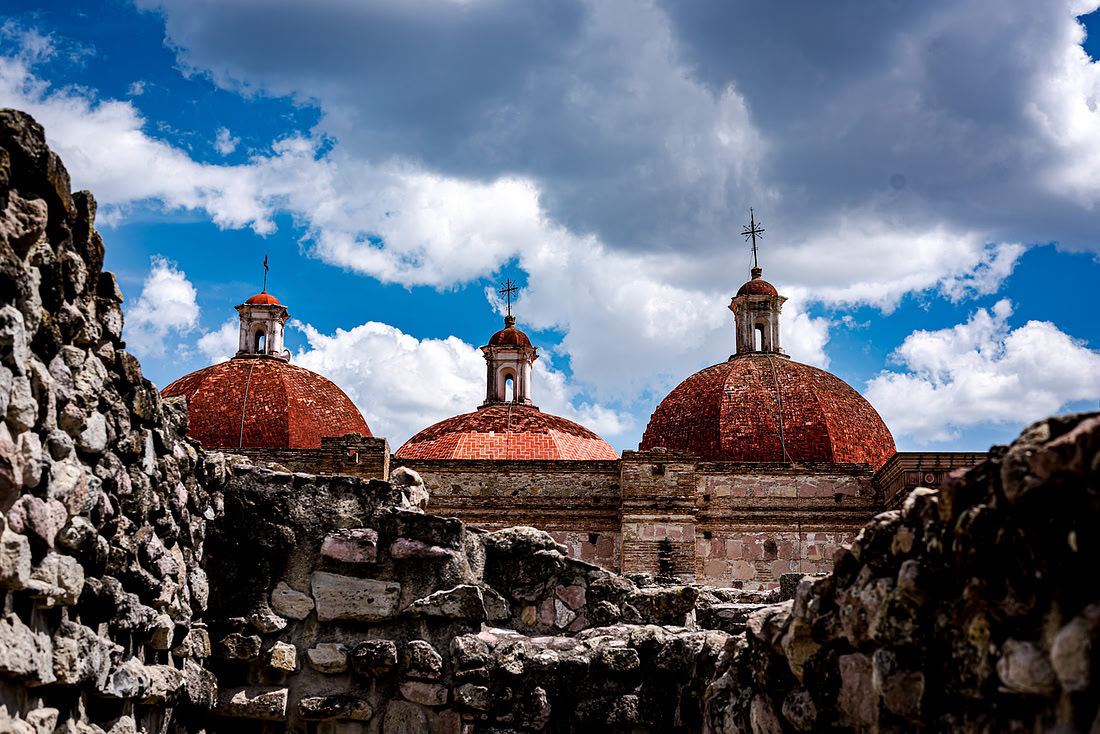
Most tours pair it with Mitla, a Zapotec site known for its geometric stone mosaics, cut and fitted without mortar. It’s small and doesn’t take long to walk through. Some guides also stop at a family mezcal palenque on the way back, which is nice if you won’t have time for the Mezcal Route below.
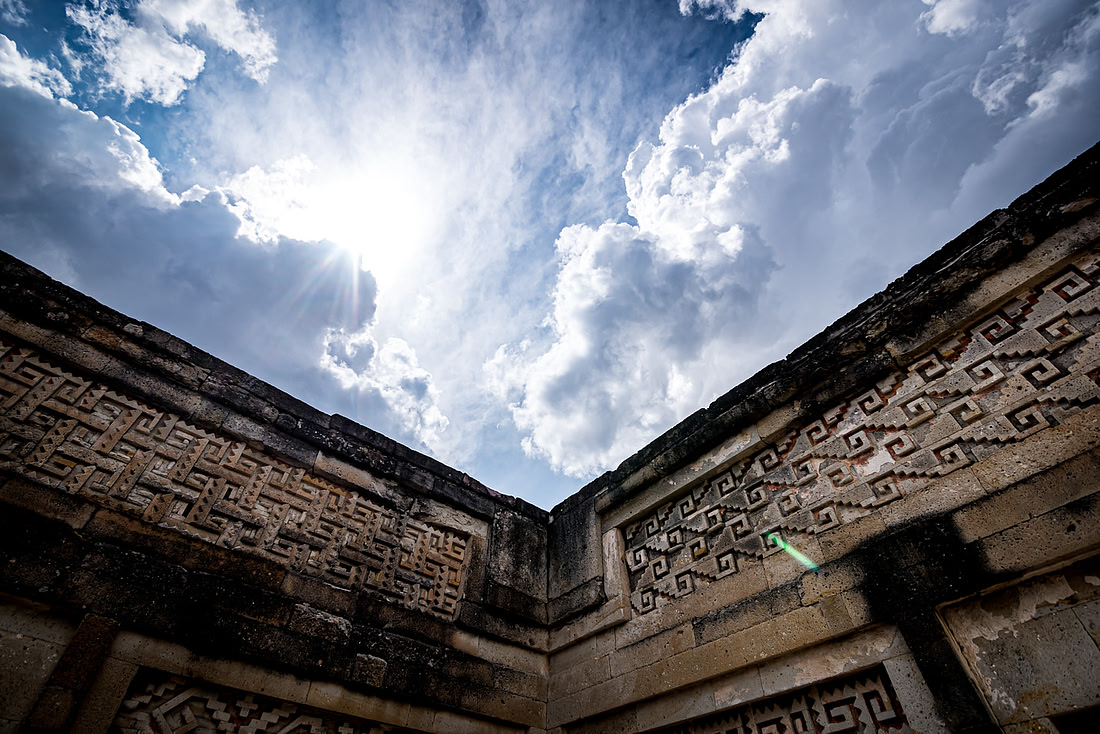
The geometric mosaic friezes at Mitla — cut and fitted panel by panel, without mortar.
Plan on a full day. For getting there, entry fees, and the best time to go, see my guide to Hierve el Agua.
Monte Albán
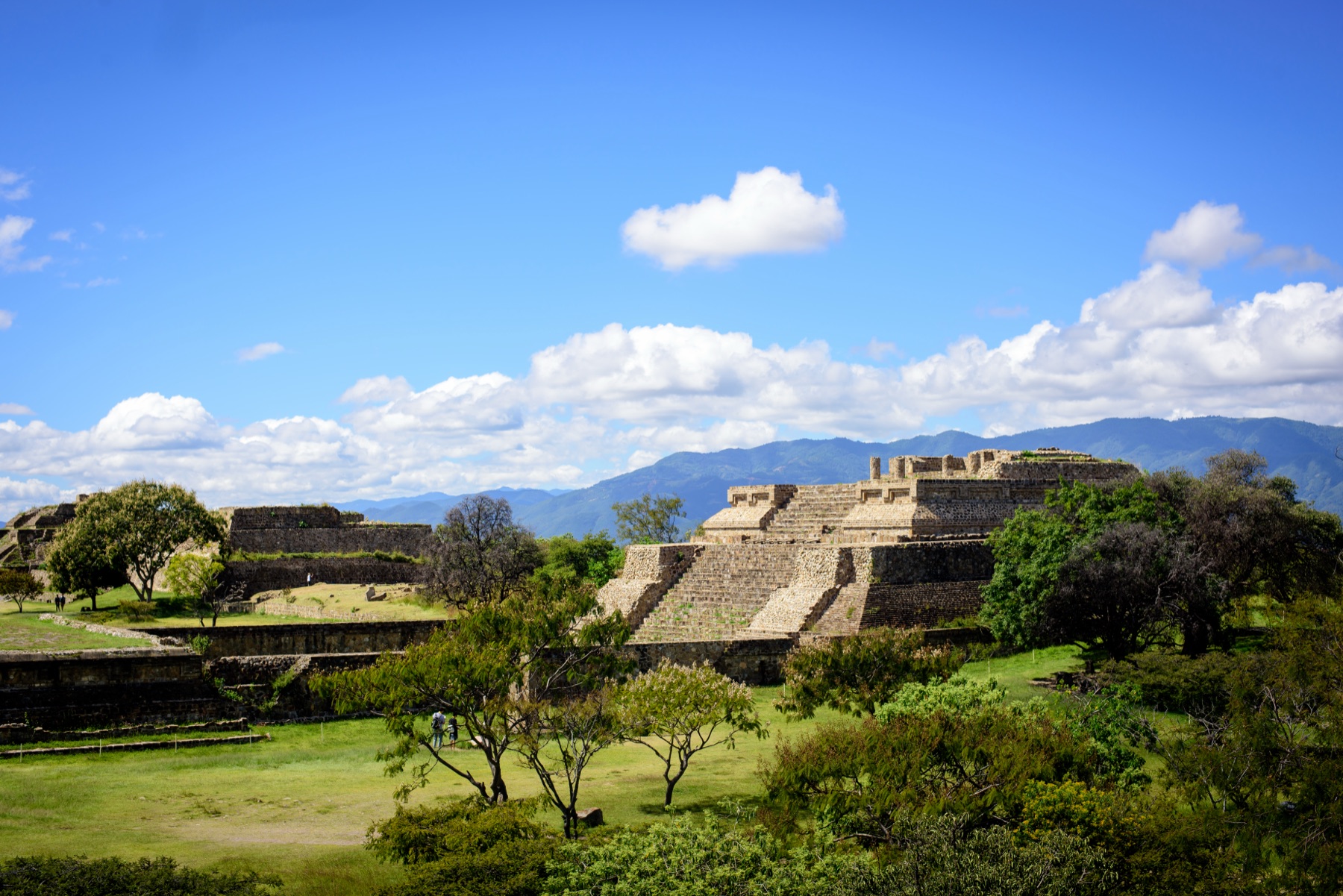
Monte Albán is the old Zapotec city on a leveled mountaintop above Oaxaca, founded around 500 BCE. From the Great Plaza you can see all three arms of the valley.
It’s thirty to forty minutes each way, so a lot of guides make it a half-day with a stop in San Bartolo Coyotepec or Arrazola on the way back. Go early. There’s almost no shade, and by midday it’s hot.
If your guests only have one free morning, this is usually the one I suggest.
The Mezcal Route
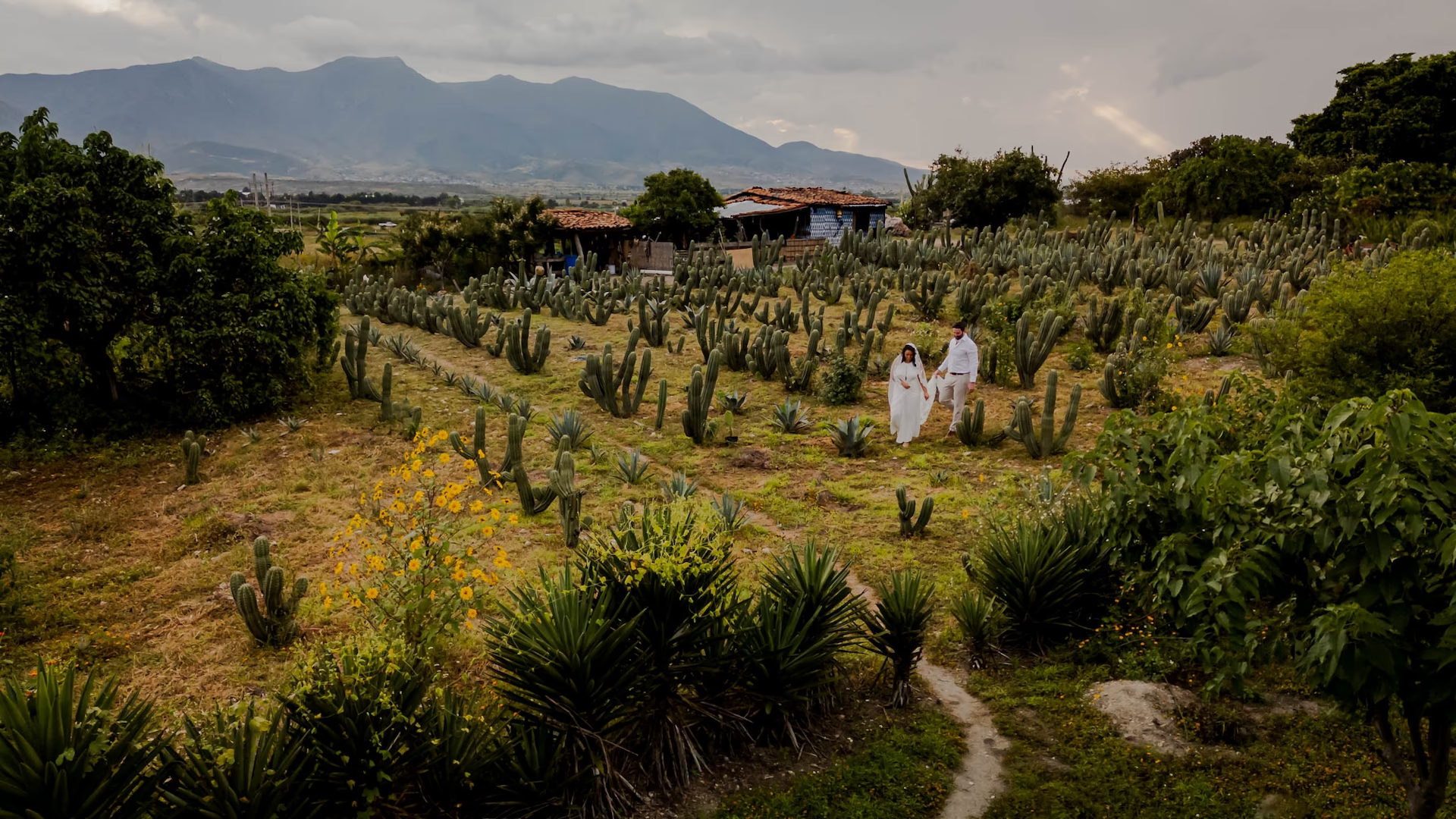
Agave fields near Yagul, in the heart of mezcal country.
The Mezcal Route is the area around Santiago Matatlán and the villages nearby, where families still make mezcal by hand. At a palenque they’ll show you the process: the agave roasted in an earthen pit, crushed under a stone wheel, fermented, and distilled.
Tastings usually start with espadín, the most common agave, and move on to wild ones like tobalá and tepextate. It usually comes with orange slices and sal de gusano.
Go with a driver, and take it easy if the wedding is later that week. If you’re here on a Sunday, you can add the market in Tlacolula.
San José del Pacifico
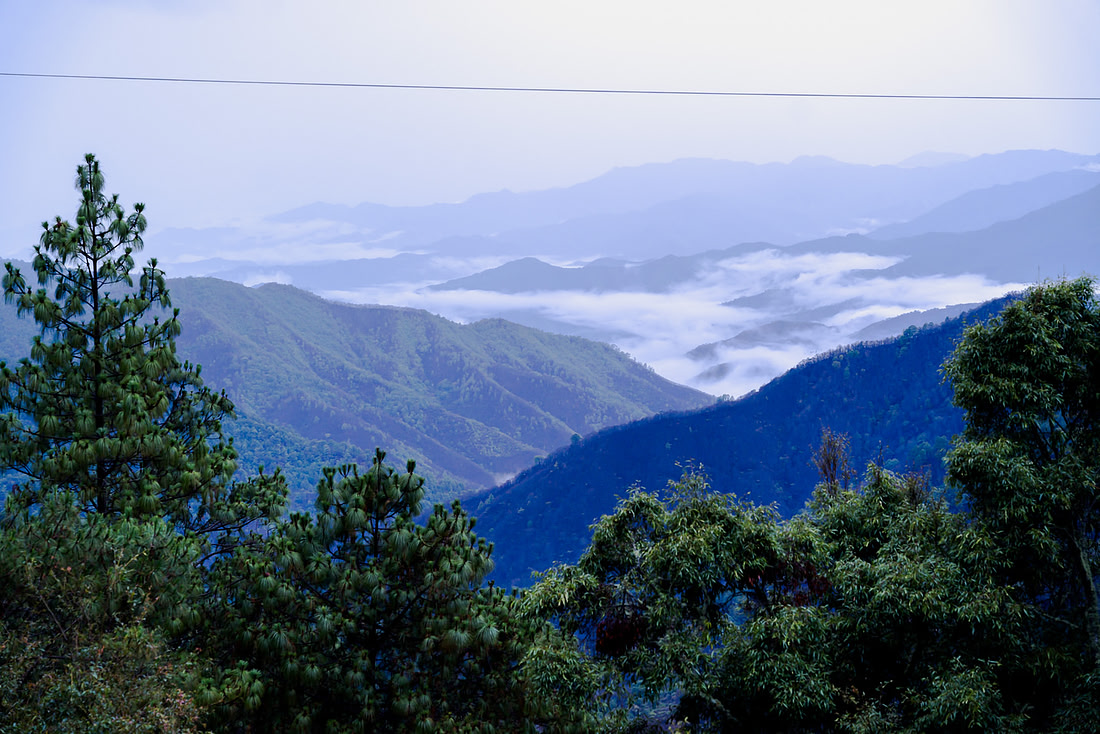
San José del Pacifico is about three hours south of Oaxaca City, on the road to the coast, high enough that on many mornings the clouds are below the town. The drive up is through pine forest, with a lot of curves and some good viewpoints.
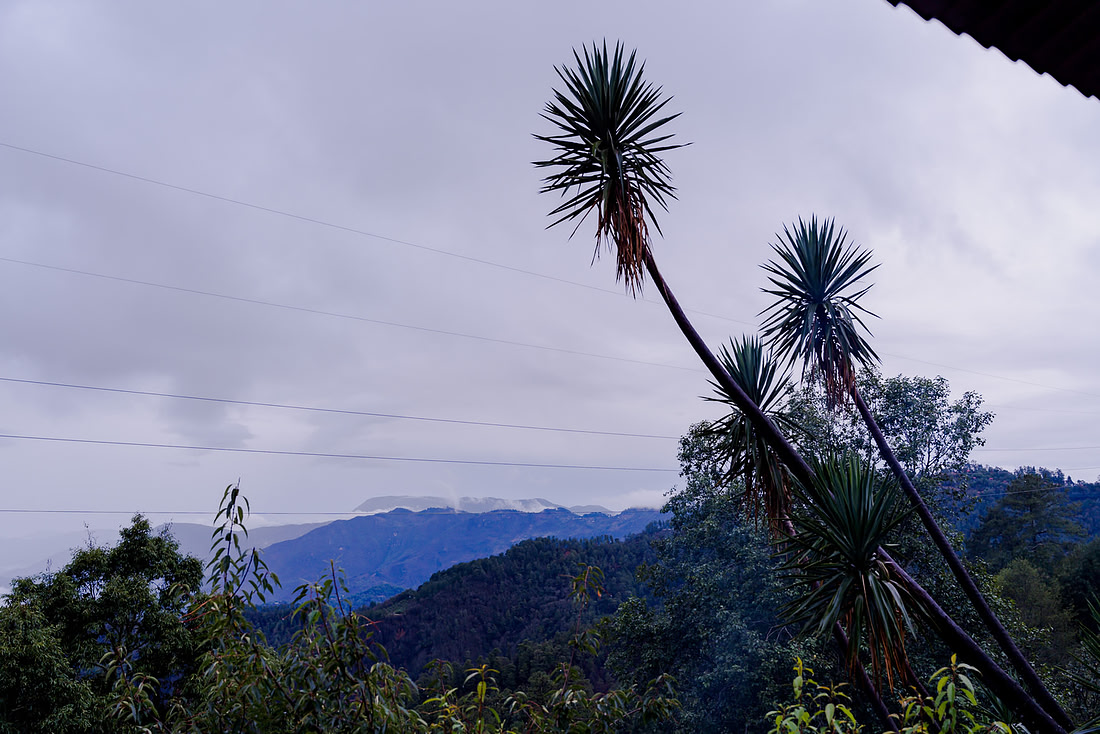
Stay the night if you can, in one of the cabins, so you’re there in the morning when the clouds are below you. It’s cold, quiet, and very different from the valley. Worth it if you have an extra day or two.
El Día de los Muertos

If you’re here between October 31 and November 2, you’ll see Día de los Muertos. After dark, families decorate the graves at Panteón General and the smaller cemeteries with marigolds, candles, food, and photos, and many stay through the night. These are real families remembering their own people, so be respectful, and go with a guide who knows where to walk and when to put the camera down.
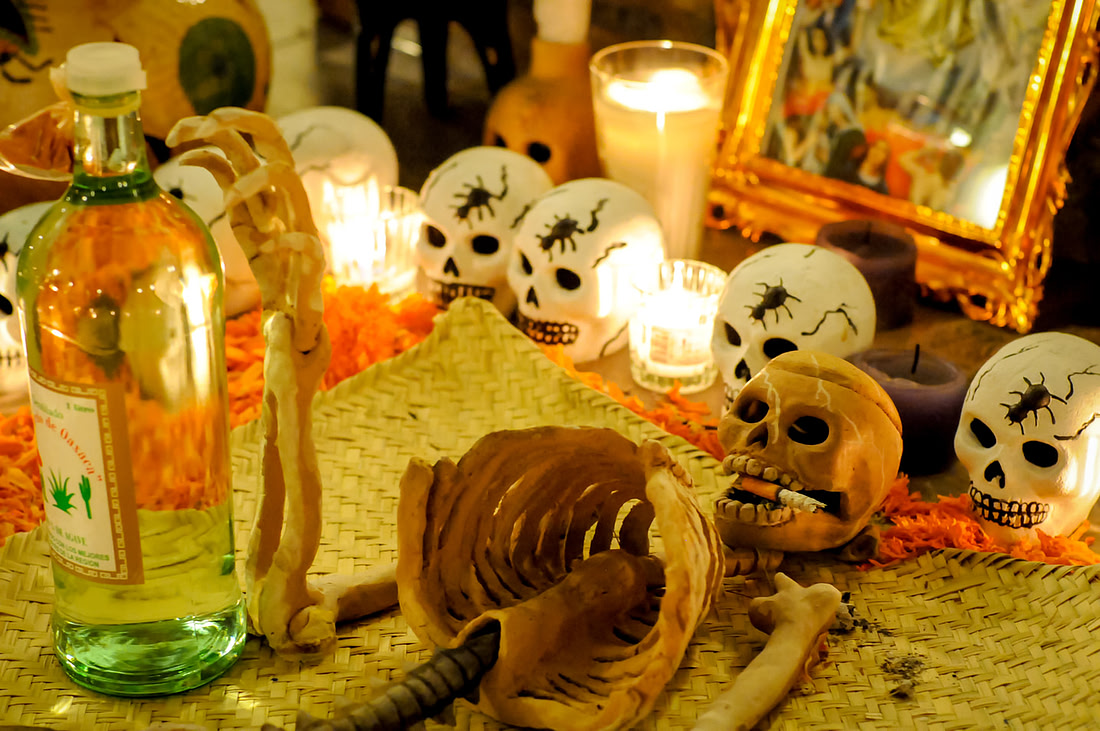
If your wedding falls around those dates, set aside an evening for it.
Planning around your wedding
If you’re fitting these into a wedding trip, I usually suggest the Centro first, since it needs no planning. Then Monte Albán, the villages, or the Mezcal Route early in the week, and Hierve el Agua a day or two before or after the wedding. San José del Pacifico needs an overnight, so plan it separately. Once you have a date, I’m happy to help you plan the week.
I hope you found this useful. Get in touch if you have questions, or if you’re looking to book a photography session at any of these locations — Hierve el Agua especially. You can reach me at the contact page, by WhatsApp at 52-951-594-3025, or on Instagram.
Keep Planning
- Preparing Your Trip to Hierve el Agua — hours, entry fees, and the best time of day to go
- How to Plan a Destination Wedding in Oaxaca — a month-by-month checklist
- Walking Photo Course: Literary Oaxaca — two hours in the Centro, learning as we go
- Portraits — including a Hierve el Agua maternity session
- Real Oaxaca Weddings